
HUMANS AS A HYPERKEYSTONE SPECIES
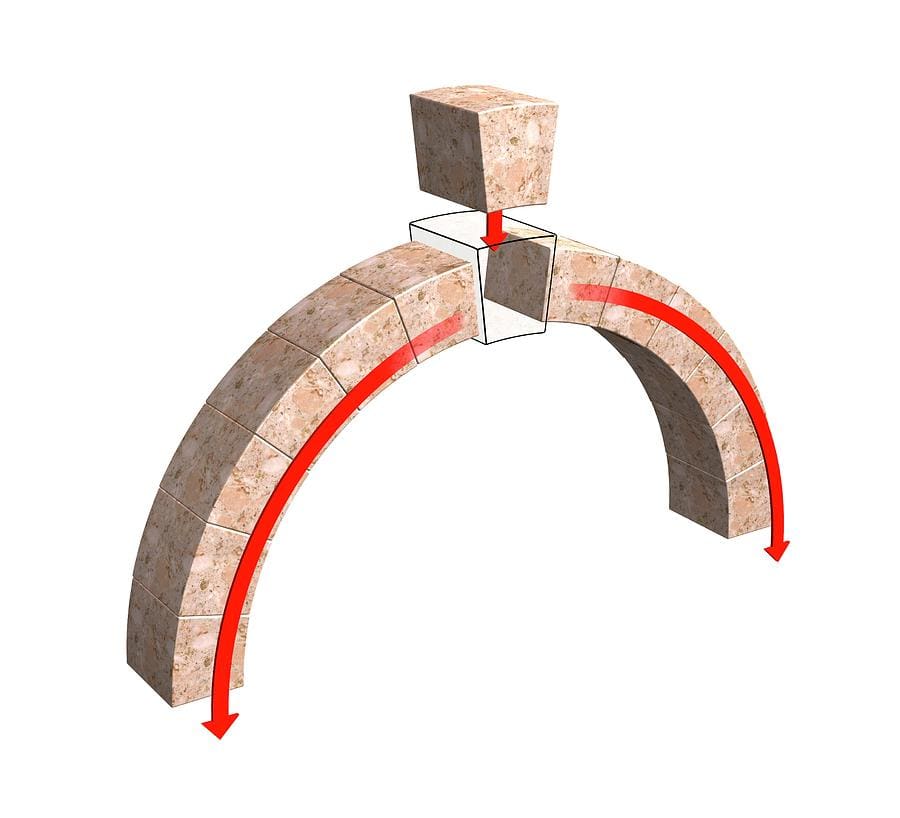
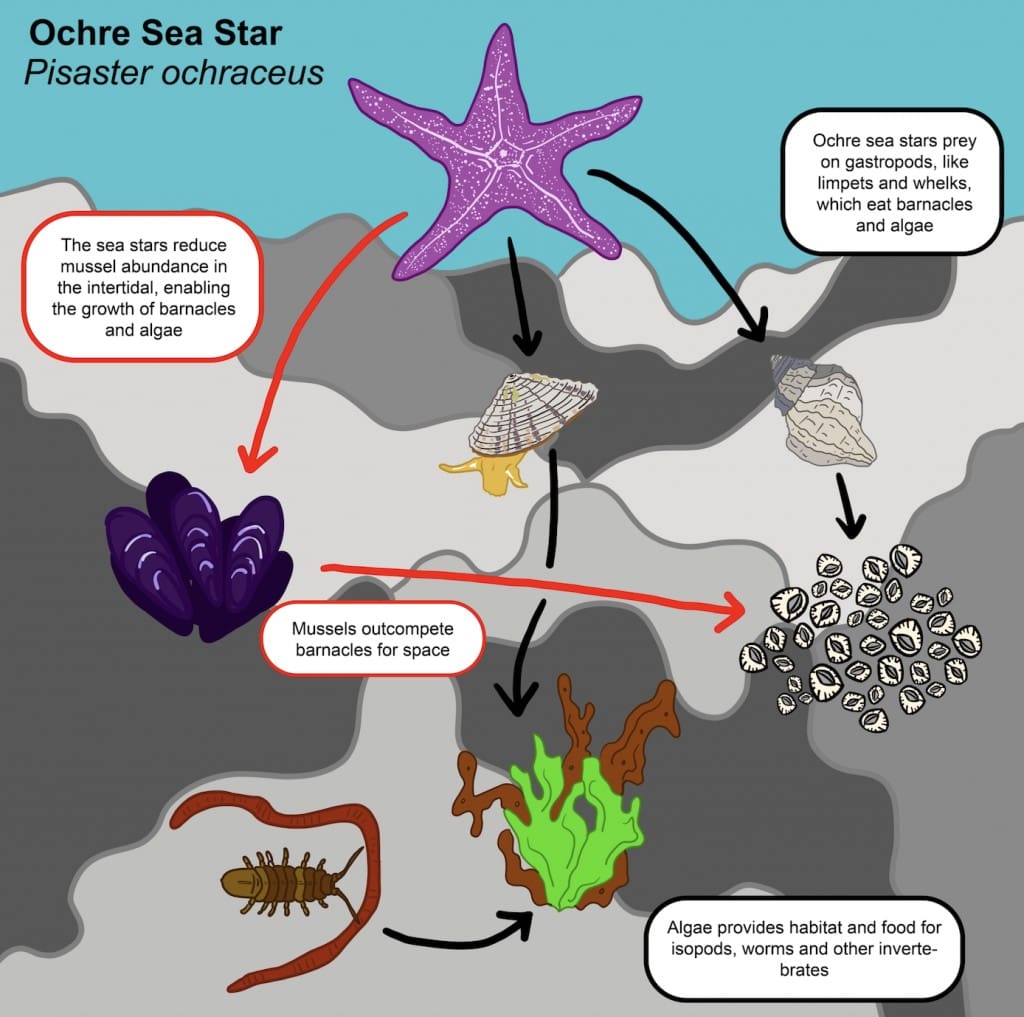
A keystone species is one that creates conditions for many others to thrive – maintaining the structure of an ecosystem and supporting biodiversity. Some well-known examples are wolves, beavers, and star fish. Wolves control elk populations and in so doing support and control many other species that are related to the elk such riparian plantings along streams and fish populations. In Yellowstone National Park, the return of the wolf population in 1995 (following their extinction from hunting) allowed riparian trees like willows and aspens to regrow and restored habitats for fish, beavers, and birds. Beavers are considered both keystone species and ecosystem engineers because their dam building slows water flows and erosion, and makes deep ponds and wetlands. The work of beavers supports many species from aquatic invertebrates to amphibians, birds, fish, and many plants. By slowing and spreading water, beaver habitats are able to withstand drought conditions. For these reasons, beavers are being introduced in many areas and beaver-dam analogs are utilized in restoration work including in local Kumeyaay reservation lands (see Kumeyaay rock drops ref). Star fish (sea stars) function in a similar way – when they are removed from an ecosystem, the mussel population explodes and the biodiversity plummets because the mussels fill the space of many other organisms. The star fish are top predators and by consuming large amounts of mussels, sea urchins and barnacles – they create space for other organisms such as anemones, algae, and giant kelp (see image below and Mayne Conservancy 2020). The term keystone species comes from an architecture metaphor: a keystone is the wedge-shaped stone at the top center in a stone arch which locks all the other stones in place (see featured image; credit Claus Lunau, 2016). Like a keystone in an arch, keystone species play a disproportionately large role relative to their numbers in an ecosystem.
Humans have the choice to essentially function as an invasive species devouring resources or as a keystone species that supports other species. Historically, humans have taken on a role as “steward” which reflects the dominant Western culture where humans are the manager and nature is the managed. This role also implies that humans and nature are separate entities. Aldo Leopold, a conservationist who wrote “A Sand County Almanac” (1949; including a final essay “The Land Ethic”), proposed that humans take on a role as an interdependent member of a “biotic community” with obligations that follow from membership rather than the inferred superior status a a steward (see Leopold, 1949).
Many Indigenous Peoples have long understood that human interaction with the natural world has been critical for its thriving and can provide a path forward for regeneration. Kumeyaay People knew that mindful plant harvesting increased the abundance of those plants and that cultural burns supported ecosystem health. Dr. Lyla June Johnston, a Diné (Navajo) scholar points out many examples historically of Indigenous land management that supported ecosystems as a keystone species such as Pacific northwest clam gardens, Australian eel fisheries, and Bolivian flood plain aquaculture. Her doctoral research focused on the ways in which pre-colonial Indigenous Nations shaped large regions of Turtle Island (North America) and globally to produce abundant food systems for humans and non-humans (Lyla June Johnston, 2022).
Ecologists consider humans to be a “hyperkeystone species” because our impact is so much greater than our biomass and because we affect many other keystone species (see Worm and Paine, 2016). Our effect on other keystone species drives complex interaction chains by affecting these keystone species across many habitats and diverse biomes. Moreover, human exploitation rates on marine and terrestrial species are massive compared to other predators.
Interestingly, ecologists have tended to view humans as an externality while economists view ecosystems as an externality. Both perspectives miss the opportunity that scholars and Knowledge Keepers such as Dr. Lyla June Johnston describe of humans taking on a role as a respectful keystone species that mindfully cares for our non-human relatives for both of our benefits. Dr. Lyla June Johnston’s words encourage us to re-think our role as a keystone species: “There ‘s many ways that human beings around the world have not just not hurt but have actually been a beautiful gift to the Earth, a keystone species that actually has become a linchpin in the healthy functioning of the ecosystem. And we treated the earth so good, that She would actually miss us if we left. That’s what I’m encouraging people to try to become again.” (Lyla June Johnston, 2022).
There are many ways we can choose to be a better relative with the Earth — planting a polyculture meadow is one way to do this in urban ecosystems!
References
Tags: ecosystem, keystone species, polyculture