
Tribal Beneficial Use of Water: Mono Basin
The Mono Lake Basin, near Yosemite National Park in Eastern California, supplies 1-3% of the potable water to the city of Los Angeles through the Los Angeles aqueduct. The Los Angeles Department of Water and Power (LADWP) began diverting water from four tributary streams to Mono Lake in 1941, adding 350 miles to the Los Angeles aqueduct, and averaging about 57,000 acre-feet of water annually between 1941 and 1970. In 1994, a court ruling limited LAWP’s diversions to a maximum of 16,000 acre-feet per year, depending on the lake’s elevation (Times of San Diego, 2025). This amount of water is a small portion of the total half a million acre-feet of water used annually in Los Angeles, and yet even this amount is causing grave harm to the Mono Basin Lake and streams. Although Los Angeles could obtain this water from other vendors, other sources are more expensive which would raise water rates, and Colorado River water is shared with other users.
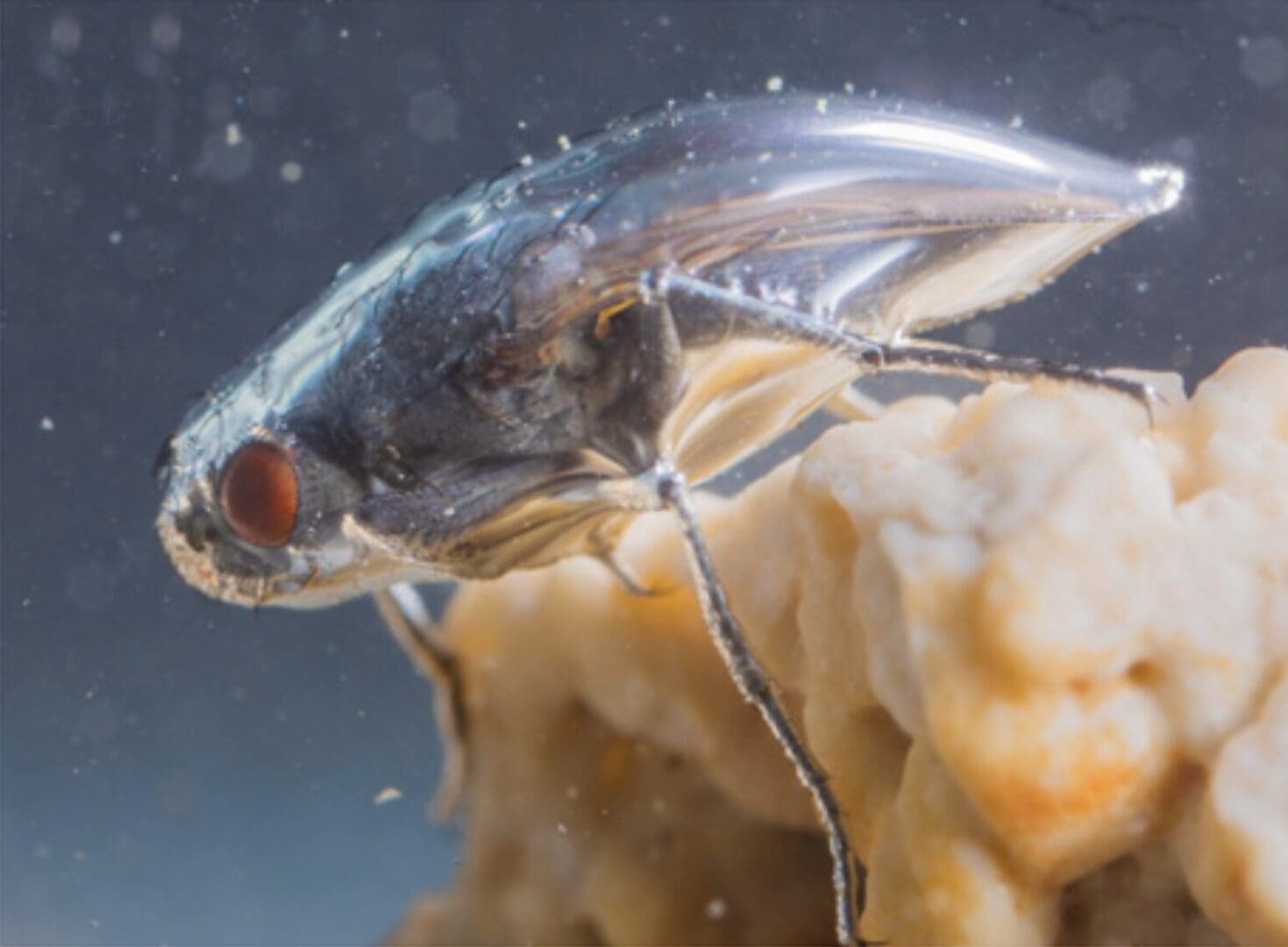
The Indigenous People of Mono Basin are the Kootzaduka’a Tribe, whose name means kootzabe (brine fly pupae) eaters. The brine fly is one of a small number of species thriving in the hypersaline environment of Mono Lake and its lifecycle is primarily underwater as shown in the figure below. The adult hatches from pupae floating in shallow waters and forms an air bubble to provide oxygen as it “scuba-dives” underwater using the limestone rock towers known as “tufa” for attachment. The Kootzaduka’a people traditionally harvested the brine fly pupae or kootzabe from the shallow lake waters in the spring and summer, and then dried them for food and trade. The brine fly pupae are highly nutritious and an important source of fat and protein for the Kootzaduka’a people — as well as very important to their tribal culture and identity.
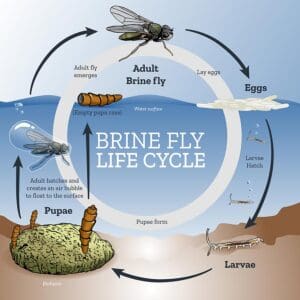
Despite the reduced diversions from the Mono Basin mandated in 1994, the Mono Lake level is not adequate for the brine fly. The increased salinity of the Lake is resulting in smaller brine flies with lower fats stores which means they are less nutritious. More importantly, the numbers of brine flies are greatly reduced. With lowered Lake levels, the tufa columns become exposed and the brine flies are unable to use them to scuba dive underwater to lay their eggs — thus disrupting their entire life cycle. The current Lake level is about 6380 feet and scientists have determined that the level needs to rise to 6392 feet for the health of the brine flies (see monolake.org below).
In 2017, the California State Water Board passed a resolution adding Tribal Beneficial Use to their standards for water bodies. Beneficial uses are the designated uses for a water body and prior to 2017 were limited to municipal supply, recreation and habitat for aquatic life. The nine regional water boards work with the tribes in their area for these uses. Adding Tribal Beneficial Use provides the opportunity for a more stringent water quality standard if needed for either cultural or subsistence use, which are the two categories for Tribal Beneficial Use. The Kootzaduka’a Tribe is working with the Lahontan regional board (region 6; see map below) to get approval for both cultural and subsistence uses for the Mono Basin water bodies — including the tributary streams and Mono Lake. They have gotten preliminary approval for the cultural use of harvesting the riparian plants willow and tule for basket making. More stringent water quality is needed for this cultural harvesting because traditionally they are prepared by mouth which is risky for waterborne infections if the water isn’t sufficiently clean. They are also working on approval for subsistence use which will include fishing from the streams as well as harvesting the kootzabe — brine fly pupae. For the subsistence Tribal Beneficial Use, the water level in the Lake will need to be high enough to support the fish populations in the tributary streams as well as the brine fly life cycle in Mono Lake.
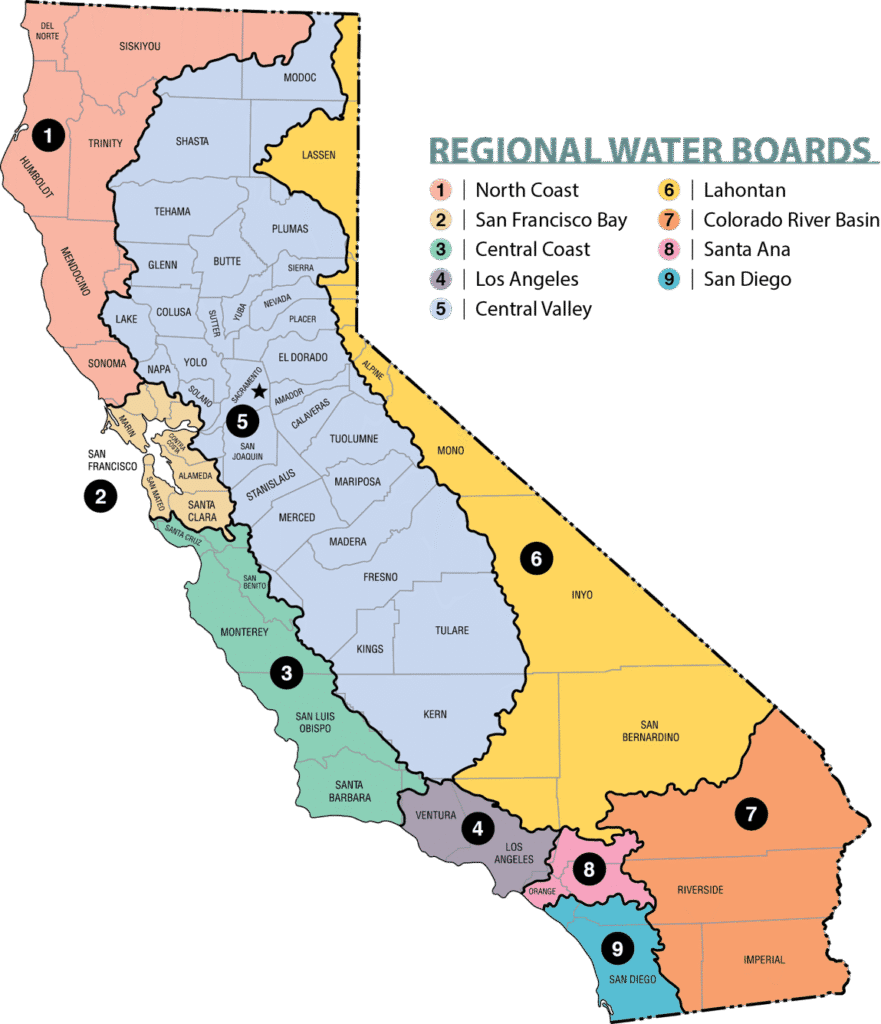
Currently, the Lahontan regional board is the furthest in the process of granting Tribal Beneficial Use of the nine boards. Although there are cultural differences among the tribal peoples of California, there are some common threads which make the preliminary success in the Lahontan region hopeful for other regions. The traditional preparation of willow for basket making is shared by the Acjachemen Tribe of Orange County (region eight) and the Kumeyaay Tribe of San Diego (region nine). The Tribal Beneficial Use ruling provides a vehicle to protect cultural use of water and to also potentially restore water rights or at least to divert less water to Los Angeles. Stay tuned as we continue to follow up on this story!
References