

Historic Paddle of Undammed Klamath River by Indigenous Youth
This Friday a group of Indigenous youth will complete their 300 mile paddle from the headwaters of the Klamath River in Southern Oregon to its mouth near of Crescent City, California. This paddle celebrates the removal of four dams from the Klamath after a decades-long campaign led by the Yurok, Karuk, and Klamath tribes and is the culmination of 3 years of kayak training for Indigenous youth from these tribes. The paddle is led by the group Rios to Rivers who formed the Paddle Tribal Waters Program to reconnect native children to the ancient river. The youth are the very first to make the entire descent of the undammed river! Historically the native people living along the Klamath River used dugout canoes to travel up and down the river for trade and fishing. The river provided food and transportation but also has been and still is central to the spiritual and cultural identity of the tribes that live alongside it. The work of Rios to Rivers is in collaboration with a coalition of nonprofits, paddle clubs, and local Tribes and communities, and includes a celebration and symposium to highlight the ecological and cultural significance of the restored river. For the youth, ranging in age from 13 to 20, this is an epic month long journey including challenging class IV rapids such as “Big Bend” and “Hell’s corner”.
The dams were installed between 1918 and 1966 for hydroelectric power by owner PacifiCorp and resulted in the decimation of the Shasta Indian Nation — whose lands were covered with reservoirs. Fish migration was blocked by the dams which greatly reduced the food supply as well as access to traditional fishing grounds for all of the tribal people living along the river. Now more than 2,800 acres of land will be returned to the Shasta Tribe. This is huge since the Shasta tribe was largely massacred during the gold rush and then their villages and sacred lands were destroyed by the damming of the river. This land has remained deeply held in their hearts and the heart of their culture for thousands of years.
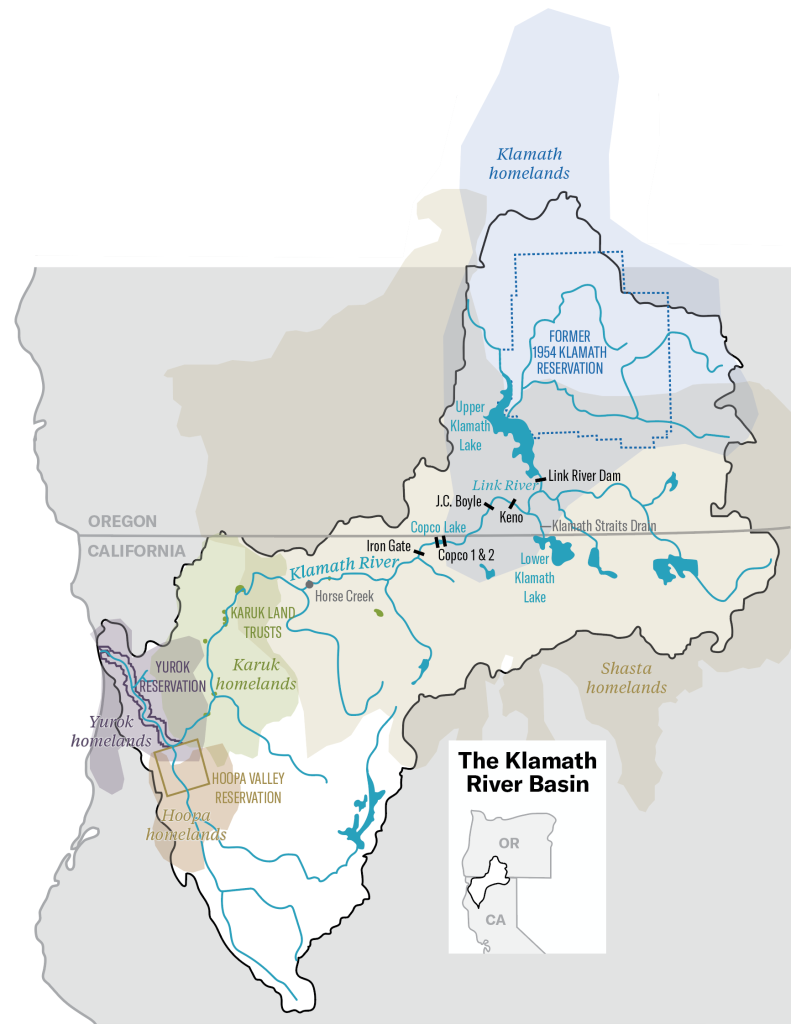
Chinook Salmon were expected to slowly make their way up to the headwaters and instead were spotted less than two weeks after the final dam removal in September of 2024 — in the upper Klamath River basin where they hadn’t been seen for 60 years. In addition to the restoration of Shasta tribal land, close to 47,000 acres of ancestral homelands of the Yurok in the lower Klamath basin will be returned to the tribe this year after being owned and operated by the industrial timber industry. This restoration will complement the work being done upriver.
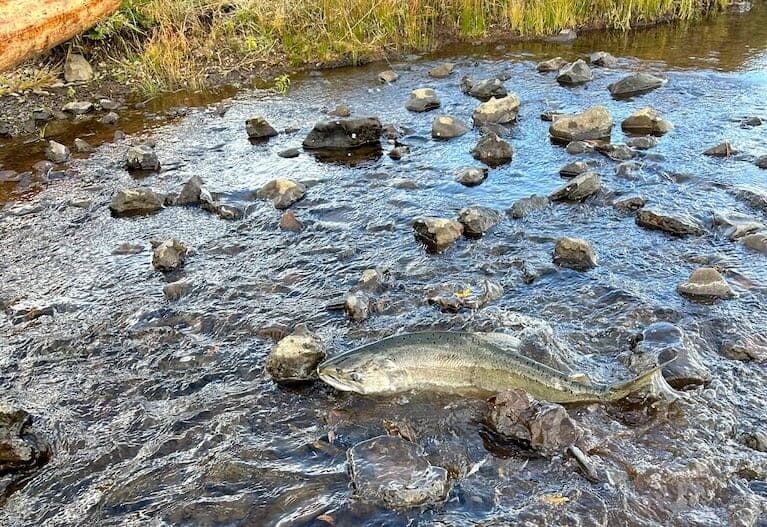
Courtesy of Mark Hereford/Oregon Department of Fish and Wildlife
One project upriver is the restoration of a marsh by the Klamath Tribes 30 miles northeast of Upper Klamath Lake, the headwaters of the river. According to Klamath Tribal Chairman Clayton Dumont, this marsh was historically the site of the Klamath Tribes’ largest village and it remains a vital source of water for the Klamath Basin. “Ecological revitalization is synonymous with cultural revitalization for us,” Dumont explained.
In 2019, the Yurok Tribe granted the Klamath River legal personhood — providing the river recognition as a living entity with rights similar to a human. Personhood status aims to protect the river’s health and to ensure its right to exist and flourish. This concept is part of the Rights of Nature movement. The resolution came after many years of low water levels in the river, which harmed the salmon population and resulted in cancelled fishing seasons. Resident fishes of the upper Klamath are highly endemic, meaning that they are unique to this location in the world. The legal personhood status of the Klamath provided a legal basis for advocating dam removal and restoring the river’s ecosystem. Similarly, the White Earth Band of Ojibwe granted wild rice – Manoomim – legal personhood, along with the freshwater sources it needs to survive in Minnesota, in 2018 (see below).
Giving a legal status of personhood to the river is an expression of the Yurok Tribe’s deep cultural and spiritual connection to the river — which they see as a relative with its own spirit. Granting legal rights to nature is a way to align tribal environmental ethics with the law. Rights of nature can shift the legal framework from viewing nature as an object of commodification to recognizing it as an entity with its own rights and intrinsic value (Warner and Lillquist, 2023). Ultimately rights of nature could lead to a more harmonious relationship between humans and the environment, promoting both human and planetary wellness. In the words of the late Indigenous author, theologian, and activist, Vine Deloria Jr, “Tribes are not vestiges of the past, but laboratories of the future.” (1965, Hearings 89th Congress).
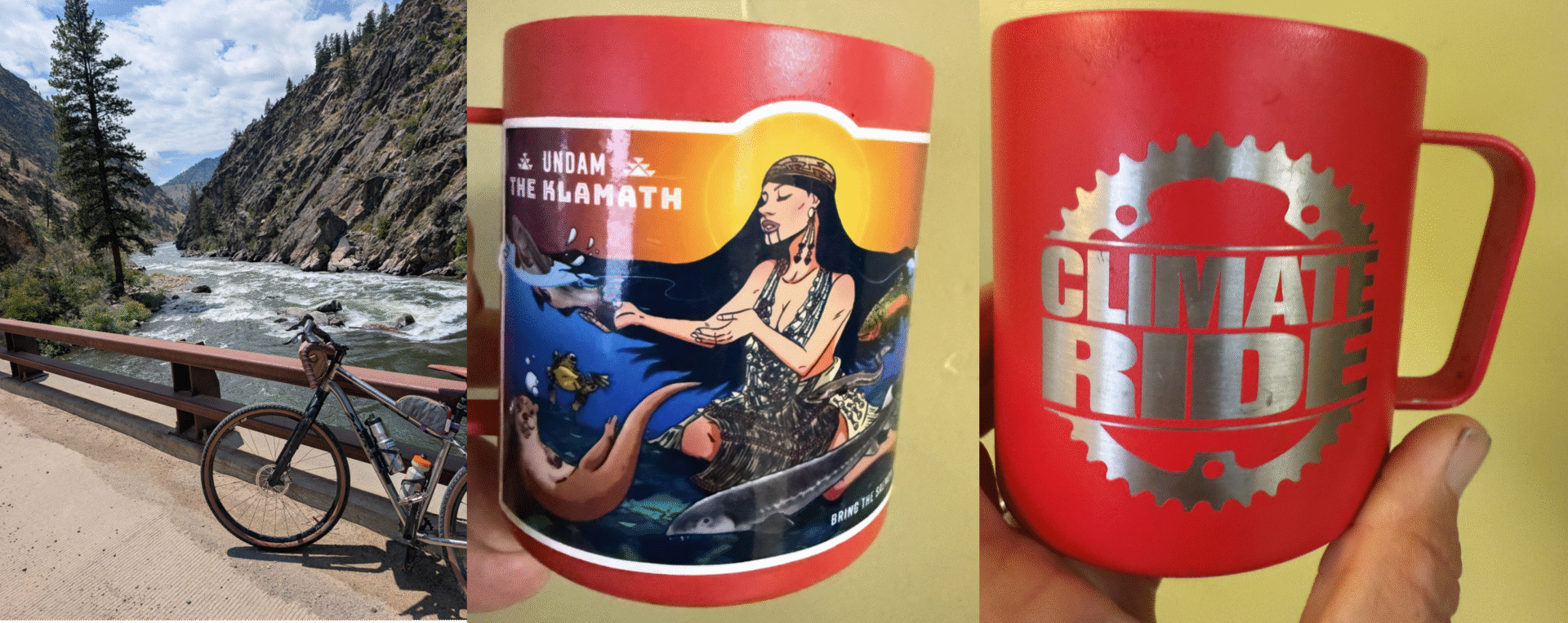
At Dwelling On Carbon, a big part of our mission is to foster a deep connection between people and nature. In part this is about breaking down the binaries that separate us from the nonhuman world. We can learn a lot from our Indigenous relatives about how to reimagine ourselves as inseparable from nature. The story of undamming the Klamath has personal meaning for me as I have been following it for awhile as you can see by the photo of the sticker on my mug below. One way I connect with nature is on my bike including amazing bike rides with the nonprofit Climate Ride — most recently in very remote areas of Idaho nearly always riding along a river such as the Salmon or a tributary (see photo left). Please follow us on Instagram (@dwellingoncarbon) to find out about upcoming events that include local bike rides and native plants! And we’d love to hear your thoughts about rights of nature and legal personhood for rivers, plants, mountains and ecosystems!
References
The river that came back to life: a journey down the reborn Klamath. Guardian June 7 2025. Gabrielle Canon.
Undamming the Klamath. Underscore Native News May 7 2024. Nika Bartoo-Smith
Legal rights of the Klamath River
Laboratories of the future: Tribes and Rights of Nature. Warner and Lillquist, 2023.
Tags: legal personhood